
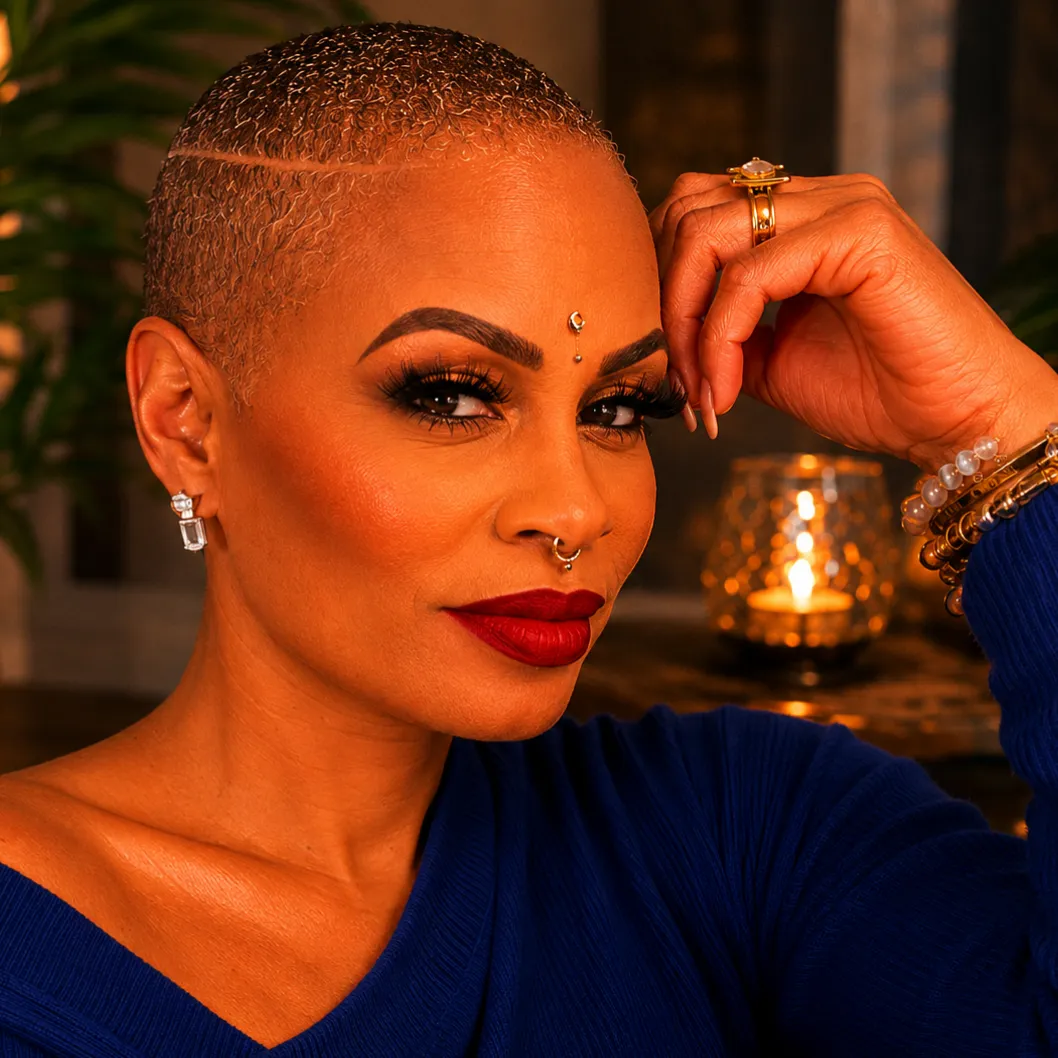
Kimberly Bargassè guides people through grief, shadow, and the sacred in-between, helping them find their way back to themselves.
As a Shaman and initiated Keeper of the White Fire, she carries the flame of purification and truth — burning away illusion to light the path for others.
Her calling was forged through personal loss: the death of her mother led her to Iquitos, Peru, where her spiritual gifts awakened through the region’s ancestral healing traditions.
She is a certified Master Practitioner of Energy Medicine through The Four Winds, trained in Q’ero shamanic practices, and deepened her studies with Dr. Rachel Mann, PhD, of the Awakened Heart Institute. She also holds certifications as an End-of-Life/Death Doula and Master Life Coach.
Beyond her private practice, Ener-Ki, she serves as senior faculty at the Awakened Heart Institute, bringing not only knowledge and skill but the grounded perspective of someone who has walked through profound transformation herself. Drawing from shamanic healing, energy medicine, soul retrieval, ancestral healing, ceremony, spiritual life coaching, and end-of-life care, she walks alongside others with compassion and presence, helping them move through grief, reclaim lost parts of themselves, and remember the wisdom and wholeness that has always been within.
- Reiki III (Master)Reiki is a hands-on energy healing method developed by Mikao Usui in 1922. What sets it apart is the attunements passed from Teacher/Master to student, opening up their energy fields. Reiki involves transferring universal life force energy from practitioner to client, with hands placed on or above specific body locations. Symbols are used with different intentions, visualized or drawn. Reiki can be done in person or through distant healing, lasting 60-90 minutes. It aids in pain relief, healing, relaxation, and balancing chakras and aura energy. Clients remain clothed on a massage table during sessions. For IICT purposes, a Reiki Master is someone who is qualified to teach and attune others to Reiki.
- Shamanism / Shamanic HealingShamanism and Shamanic Healing encompass visionary practices across various cultures, utilising altered states of consciousness, imagination, and creativity for personal and spiritual growth. Rituals, symbolism, mythology, and body/mind techniques help practitioners "walk between worlds" and conduct soul retrieval. Shamans work at individual, group, family, and community levels, employing human potential for insight, spiritual healing, and self-realisation. Sweat lodge ceremonies, physical and psychological challenges, and the use of spiritual tools and art are common practices. While demanding, these experiences can be deeply rewarding, fostering a lifelong commitment to "soul-work" and self-discovery. IICT does not endorse the usage of psychotropic drugs such as Ayahuasca and/ or San Pedro and the Shamanism modality does not include the usage of psychotropic drugs such as Ayahuasca and/or San Pedro.
- Shamanic StudiesA Shamanic Studies practitioner weaves ancient wisdom with modern practices to guide clients toward deeper self-awareness and energetic balance. Sessions may incorporate rhythmic drumming, shamanic journeying, and connection with power animals or spirit guides to access inner guidance and promote healing. Techniques such as rattling, chanting, and sound healing are used to shift energy and create harmony, while sacred space is established through rituals like smudging or calling on the four directions. Practitioners may also facilitate heart-opening cacao ceremonies, fire rituals* for release and renewal, or nature-based practices to reconnect with the elements. Each session is tailored to the client’s needs, offering a safe and supportive environment for personal growth, clarity, and transformation. *Fire ceremonies are used for transformation and letting go of old patterns or intentions. For example, participants write intentions or what they wish to release on paper and burn it in a fire pit or candle flame, symbolising transformation. This does NOT include fire walking. It is essential to understand that a Shamanic Studies practitioner is not a Shaman or Shamanic Healer and cannot conduct advanced rituals, ceremonies, or ancient practices reserved for genuine shamans (i.e. Soul Retrieval, Helping Spirits Transition, Ancestral Healing, Extraction of Intrusive Energies, Sweat Lodge, Vision Quests, Working with Alternate Dimensions/Realms, Shapeshifting, etc.). Becoming a Shaman or Shamanic Healer requires a three-year apprenticeship with a shaman or elder from an Indigenous community.
- Shamanic BodyworkShamanic Bodywork is a holistic healing modality that integrates shamanic practices with body-centred therapies. It combines elements of energy work, intuitive healing, and ancient shamanic techniques to address physical, emotional, and spiritual imbalances. Practitioners use touch, movement, and energy manipulation to facilitate healing, release blockages, and restore harmony within the individual's energetic and physical systems. Shamanic Bodywork often draws on indigenous wisdom and spiritual connections to facilitate deep transformation and healing, promoting a sense of interconnectedness and alignment between the individual and the natural world.
- Spiritual MentorshipSpiritual mentorship is a transformative relationship in which a mentor provides guidance, support, and wisdom to an individual seeking spiritual growth, expansion of consciousness and self-discovery. Through regular interactions, discussions, and personalized teachings, the mentor helps the mentee explore their spiritual path, deepen their understanding of spiritual concepts, and navigate challenges and obstacles along the way. These practitioners may incorporate various techniques to support individuals in aligning with their higher selves and accessing their innate spiritual potential. The goal is to empower individuals to live authentically, find meaning and purpose, and cultivate a deeper connection with themselves and the world around them.
- Life CoachingLife coaching is a collaborative and goal-oriented process that helps individuals, businesses, and teams to bridge the gap between their current circumstances and success. They provide guidance, support, and motivation to clients by facilitating self-reflection, exploring values, and setting action plans. Through active listening, questioning, and feedback, life coaches help clients gain clarity, overcome obstacles, and develop strategies to reach their desired outcomes. Life coaching covers various areas of life, such as career, relationships, personal growth, and health. It aims to empower individuals, foster self-awareness, and assist in making positive changes to create a more fulfilling and balanced life.